Showing posts with label researchblogging. Show all posts

Nurses on Sept 11: 'there were no patients'

No doubt many nurses today are remembering the attacks on the World Trade Center on September 11, 2001. I wasn't a healthcare professional at the time. I had moved back home and was trying to figure out my next move after a web start-up I had been involved with went belly-up. My father was at the university, my mother was gardening, and my brother was at school. I got up and wandered around the house, read the newspaper. For some reason, I turned on the TV to flip through the channels and came across some live coverage.

The towers had already been hit. Not knowing NYC well, I wasn't particularly shocked, mostly just gawking, as you get passing a car accident on the road. I told my mother what was going on, but she wasn't interested enough to stop gardening. So, I road my bike down to the university. My father was teaching a class. Some people in his department office were talking about it casually. But when I went over to the student center, where there was one large projection TV, the students were crowded around and there was a lot distress on faces and in voices. Our university is a popular spot for kids from NYC and Long Island.

In the afternoon, I went to the hospital's blood donation center, but there was already a line snaking out the door and down the sidewalk. I was turned away as they had all the volunteers they could handle and were mostly looking for rare blood type donors.

Like everyone else, I was riveted to news media for days and even weeks afterward. I briefly considered going down to NYC to see if I could help, but realistically there was nothing I could offer. Some people, like this flight attendant, said they went into healthcare following September 11th. I can't say that, although I do enjoy thinking that if something like the attacks ever happened again, I would be able to help out. (I tried going to Haiti, but was unsuccessful.)


Reflections on our response

Unlike most people, I have been unhappy with our response to the devastation. During the initial discussions of what to do with Ground Zero, someone at National Review suggested that we should rebuild the trade towers, only this time with Vulcan cannons on the roof. That about sums up my attitude to the situation: we should have demonstrated that we still had the self-confidence and optimism necessary to rebuild along with the defiance to keep the attacks from happening again; to not rebuild at Ground Zero and move on is a bad omen. I am concerned that our actual response demonstrates our diminishment as a nation. Although many people claim to have felt "united" by the events, I see the widespread focus on negative emotions such as fear and anguish as a socially-directed manifestation of many individuals' obsession with their own problems (as seen across news and entertainment media on a daily basis).
Take the National 9-11 Memorial. Prime real estate in NYC has been given over to two large gaping holes in the ground that serve no purpose other than to act as a reminder of the fact that we were dealt pain and death. The memorial has no meaning in the sense that it does nothing to tie the attacks to the broader cultural conflicts or actual physical conflict that preceded or came after September 11th. It isn't, in fact, a memorial in the sense that it commemorates nothing. Horrified as I was to see the jumpers on TV that day, those who died (rescue workers excepted) simply died.

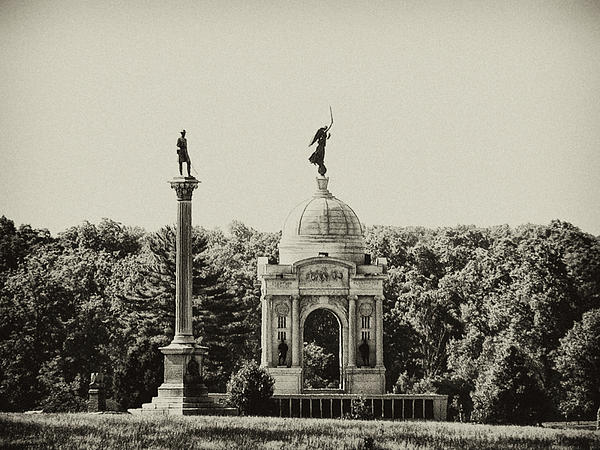
Compare the 9-11 Memorial with other memorials: they commemorate actions and actors, not victims. For example, the Gettysburg Memorial commemorates those who gave their lives fighting to change the course of history. The 9-11 Memorial is more like a cross and wreath placed beside a highway where someone died: it doesn't turn our thoughts reverently toward a past that was necessary for some to live through so that we today could have better lives, it turns our thoughts inward as a reminder of personal hurt and the pain of others. The 9-11 Memorial is like a wound that won't heal or a trauma that a person can't leave behind. In 100 years, the Gettysburg Memorial will remind our grandchildren that Americans died for freedom; in 100 years, the 9-11 Memorial will remind our grandchildren that people die senselessly because there is evil in the world. The fact that the pools and fountains are not ones in which children and parents can find delight and relief only reinforces the sense of loss, that the whole site is a monument to death and not to, as the Romans put it, agere.

There are those who will say that the 9-11 Memorial commemorates our "unity" on that day. To them, I can say only that it is a sad day when our national monuments in DC are not our symbols of national unity, when people identify with helplessness but not with national aspirations. To a generation that needs to feel fear and anger together to recognize their nationhood, I say it is a sign of your decadence and dysfunction. A generation that scoffs at a "mission accomplished" sign but feels sublimity in empty loss is a sign of the times. In an age of terrorism, what should our cities be? Centers of art and commerce or a pock-marked moonscape of monuments to our enemies' success?


Hermeneutic research on nursing narratives

In the year following 9-11, researchers publishing in the Journal of the New York State Nurses Association conducted interviews with nurses about their experiences of working on that day. They analyzed the narratives using a Heideggerian Hermeneutic approach, looking for thematic commonalities across narratives. The results are interesting in themselves, and also highlight some of the critique of the 9-11 Memorial that I make above.

From the findings section of the paper:
Seventeen nurses, 2 males and 15 females, comprised the informants. The mean age was 47.7 years (s.d. = 8.4) with a range of 32-64. Ethnicity included 13 white, 2 black, 1 Native American and 1 Asian. Education of the participants included masters (9), baccalaureate (5), associate (2), and diploma (1). Specialty areas included emergency room (4), acute care (2), home care (1), administration (3), pediatric (3), psych/mental health (3), and nursing education (1). The nurses' roles in the disaster included triage (3), coordination (7), care giving and counseling (7). Six themes and one constitutive pattern emerged. The themes are: (a) loss of a symbol, regaining new meaning. (b) disaster without patients. (c) coordinating with and without organizations. (d) rediscovering the pride in nursing. (e) traumatic stress. (f) preparing for the future.
In a more detailed explanation of these themes, their fundamental support of my interpretation of the 9-11 Memorial is given some support. One nurse said, "I usually see the towers ...I looked up 14 Street and there were no towers, absolutely no towers, and my body just shuddered, very fearfully," and another, "on my way home that night I would see the towers, and that night, - not seeing them there - still looking - maybe I am not looking in the right place... you can't believe they're not there ... disbelief ... stunned ... not being able to comprehend."

Nurses experienced ongoing stress from the trauma of the day:
Symptoms of post-traumatic stress were felt by many of the nurses. Some experienced nightmares and flashbacks of victims they cared for. Others described themselves as emotionally fragile and being able "to cry in a New York minute." One nurse has "a lot of pop-up fears that are triggered." Physical symptoms of stress, such as high blood pressure, were reported less but still significantly impacted their lives. One nurse had to change her diet, exercise more, and stop reading the newspaper and listening to the news to help decrease her blood pressure. She realized that "I couldn't leave it alone. It was affecting my health and I had to step back."
This sense of loss and stress is what the 9-11 Memorial will permanentize. And when a generation grows up that never knew the presence of the towers as normality, they will be asked to imagine the loss by visiting the Memorial. Is that a healthy long-term response to loss?

Of the researchers findings, the one probably most salient to all healthcare professionals--at least, it was the most salient for me--is the nurses' frustration at the lack of patients. One said, "We went to Chelsea pier, to the triage center, about 500 doctors and nurses, and they came from all over, we just waited and set up triage, the IVs, the tables and waited for causalities but they just didn't come," and another, "Everything was in place by 10:30 AM. and we got one patient up until 1:30 AM. We got scared then. There was a lot of death. At that point we got the body bags."


Nurses' first-person accounts of September 11

Google searches can turn up quite a few accounts of nursing on September 11th. The best of the first two pages of Google results seems to be the one from the army chief of nurses. Two others, printed in the 2002 Journal of the NY State Nurses Association, I will reproduce here in part. The remainder of these articles can be read on the journal website [PDF].

Nursing at Ground Zero: a life-changing experience. by Maria Gatto, RN

Reluctantly, we have joined past generations for whom history was made through unthinkable events of death and destruction. Our children and grandchildren will ask us where we were on that fateful, tragic day when terrorists destroyed the Twin Towers in New York City, killing thousands of innocent men, women, and children.

As nurses, we all have definitions of ourselves based on our degrees, specialties, educational experiences, and background. In the hours and days that followed the attacks, however, I realized that those really had no bearing at all. A nurse is not what you are, but who you are. In your being is your capacity to heal, help, and comfort. Your presence itself means care. During those days, I didn't have to identify myself with a license or a diploma. I just had to say, "I'm a nurse and I'm here to help." That gave me the right to go into the heart of the disaster site called Ground Zero.

There was no policy, no procedure, no one to report to or "get report from." There was no routine, no schedule, no assignment. It was nursing knowledge and skill the true nursing instinct you find when you're faced with a totally unknown experience. Life hung in the most delicate of balances. Death was everywhere; bodies, minds, and souls were waiting to be resuscitated. The living and the dead needed to be treated with the utmost respect and dignity. No drug book, care-plan, or text could prepare you for this.

Terror on the Television

That fateful day began when I was awakened by my mother. I will never forget the look of sheer terror on her face. She screamed, "We are under attack. A plane just crashed into the Twin Towers!" At first, I thought I didn't hear her correctly. Call it shock, call it denial, but I asked her to repeat what she'd said and then ran downstairs to the television. I sat in disbelief, watching the events unfold. I remember thinking, "This must be just a tragic accident." Then the unimaginable happened as a plane crashed into the second tower. The worst fear was confirmed.

A cold numbness ran through my body. I no longer felt shock and disbelief, but the ultimate in terror. In the moments that followed, I felt a pull in my heart. A message from deep inside came through loud and clear: "You must help. There is a great need and a purpose to be served. You must go there." Confused, but trusting in a faith in God, I prayed for guidance. Where to begin was now the question.

As part of a generation accustomed to going "on line" for everything, I immediately e-mailed my brother and sister-in-law on Staten Island, where my brother, James Gatto, is a sergeant at the 120th Precinct. I was frantic, wondering if my family was okay and if my brother was on duty in that area. As I waited for a reply, I tried the phone. The lines were down, so I just tried to focus myself and know that I would be led to whatever I was supposed to do.

I hoped that my brother Jim might be able to help me get into the city, because all transportation was being canceled. I phoned him again and finally got through. He told me that if I really wanted to help, there was only one way to get to Manhattan. The Staten Island Ferry was open to emergency medical and rescue personnel only. I would have to take the ferry and then find my way. "Find my way?" I asked. "What do you mean?" He told me that there would be no one to show me where to go or what to do. The entire city was in shock and total chaos. "You'll have to make your own way," he said. "Just follow the smoke, and do what you have to do. If you really need to do this, I will support you 100%. Don't worry, you will know what to do. God will be with you."

I immediately got into my nursing gear, packing a bag with an extra uniform and my nursing identification. I told my mother and father, who accepted my decision without hesitation. I was bolstered by their support and confidence in me.

Ferry to a War Zone

Jim picked me up, and we headed to the 120th Staten Island Precinct. My brother, being a man of very few words but of much quiet strength, was brief but firm in his counsel. "It will be ugly," he explained. "Nothing you have seen before can prepare you for what you will see now. No one will tell you what to do. You must tell them what must be done. The chaos of mass destruction has no rules. Make them up along the way in whatever situation you are in." He opened the car door as we arrived at the precinct. I asked him how could I get back. He smiled and said, "Exactly the way you came."

I made my way into the terminal and down to the ferry. I could feel my heart beating with a sense of urgency, and my steps got faster as I got closer. I explained to some officers that I was a nurse and needed to get on the ferry. They said to hurry and check in because the ferry was about to leave. I ran up to a woman at a small table, introduced myself, and showed her my license and ID. I jumped on the ferry just before it left. That was it. I was given no briefing, report, direction, or instruction.

There were about six other nurses on the ferry. After brief introductions, we talked about what our plans were and where we would go. One group was going to the Ferry Station, where food and supplies were being handled. Another group was going to Liberty Street, where they needed nurses to volunteer at the site. I looked out at the skyline and for the first time saw the dense cloud of rising smoke. I remembered my brother's words - "Just follow the smoke."

We rode the rest of the way in silence.

As the ferry docked, I tried to follow the group of nurses that was going to Liberty Street, but I was distracted by a nurse who tried to talk me into going to help with supplies. I declined, saying that I wanted to go to Liberty Street. We wished each other luck with a hug, and I turned around and followed the smoke.

A Modern-Day Pompeii

I began walking. There were some military officers and police nearby. I went up to a police officer and asked how to get to Liberty Street. He asked for my ID, and then told me to follow the park and make a left. I have never had any sense of direction, and I ended up in the financial district of Wall Street. This was my first introduction to Ground Zero. The story of Pompeii was the first thing that came to my mind. I was the only person walking in streets covered ankle-deep in ash. Papers were everywhere. Buildings, once shining brilliantly in the sun, were now dimmed by thick, choking dust. There was an eerie silence and then the screams of terror-stricken people.

I was directed a few more times and eventually found my way to Liberty Street. Tables were set up like a makeshift but still incomplete MASH unit. There were medical professionals everywhere trying to unload, organize, and care for the rescue workers. I felt out of place, not knowing where to begin.

I heard a familiar voice call out, "Maria?" As I turned around, I saw Angela Appuzzo, one of the clinical lab instructors from New York University. We gave each other a hug, and she asked how I had gotten down here. I told her briefly that I had felt the need to come, hopped the ferry, and walked on down. She gave me a "thumbs up" sign and a big smile. I asked her what I should do. Within two minutes, Angela gave me the basics of setting up triage. I rolled up my sleeves and got started.

All of a sudden, there was an evacuation alert. Rescue personnel and police yelled at us to run. A stampede ensued. That was my last contact with Angela...


Through the eyes of a New Yorker
by Lucille Yip, RN

September 11, 2001

I am surprised when I wake up at 3 a.m., since I had been so tired after coming home from a late dinner. I don't feel right. Somehow I feel the need to go to my living room and look at the New York skyline. It is a spectacular view, full of lights and beautiful skyscrapers. I stand at the window to absorb the peaceful beauty of the city. I return to my bedroom at 5:30 a.m.

A few hours later, I wake up to a sound of an explosion. My apartment is located at the top of a 44-floor high-rise, facing what used to be the most beautiful skyline in the world. I turn on the TV and see the news. Hoping this is a dream, I run out to my living room window in horror and shock. The World Trade Center that I had grown up with is burning out of control.

After the second plane crashes, I call my sister, who works at the Federal building [six blocks from the World Trade Center]. "I'm leaving," she says, and I don't hear from her for six hours after that. I later learn she was on the train when the power shut down and smoke began to enter the car, but she was able to get home safely.

I witness the collapse of Tower 1 and then Tower 2. They both fall like a deck of cards. My "backyard" now resembles a war zone. Shortly after the collapse, I am told to evacuate the building. Hundreds of people from the Wall Street area are walking through my neighborhood in Chinatown. People are painted with thick, white soot. Cell phones are down and long lines begin to form at the payphones. There are no subways, no buses. The sounds of sirens fill the air and New Yorkers gather around car radios to listen to the news. It is total chaos.

I need to get to the ER [at St. Vincents Catholic Medical Center] and help, but I have no way of getting there. I decide to hitchhike, something I never would have thought about doing in New York before today. I find a sanitation worker who is willing to take me.

I arrive in the ER to what appears to be controlled chaos. I am assigned to triage patients. I see patients with severe burns, smoke inhalation, and open fractures. The ER is prepared for any victims that may have survived. The trauma team, anesthesia team, nurses and doctors are situated inside and outside. Stretchers, wheelchairs, and oxygen tanks line the sidewalks. The news media have stationed their cameras across the street, hoping to catch a glimpse of any survivors.

The ER is overstaffed because volunteer nurses and doctors have come in from Long Island, Queens, Manhattan, and as far away as Maryland. Doctors and nurses I have not seen in years come to the ER, hoping to help. The camaraderie is uplifting.

The staff is informed that we can't leave the hospital until further notice. We don't know if the night staff will be able to enter the city. I am physically and emotionally tired. Late in the afternoon, Starbucks donates fresh coffee and water. It sure hits the spot. The Starbucks on Greenwich Avenue has closed its doors to the public in order to cater to our needs. The local restaurants donate sandwiches, hot food, and gallons of water. Residents from Greenwich Village came in, wanting to help and donate blood. I am moved to hear that an elderly woman brought over one plate of spaghetti for anyone who might be hungry. I am so touched to see the outpouring of support from my fellow New Yorkers.

The ER is busy, but also painfully quiet. We do not receive any survivors from the collapse. The silence after the initial rush of patients is deafening. The night shift arrives, and the staff is able to leave. I have to ask a police officer for a lift home, since there is no public transportation south of 14"' Street. I manage to squeeze into a police van filled with officers and they drop me off at Varick and Canal Streets.

As I walk through the streets of lower Manhattan, I feel like someone had sucked my spirit out of me and ripped it into pieces. The streets are empty, there are barricades on every block, stores and restaurants are closed, police and state troopers are standing on every corner, and people are wearing face masks. I am consumed by the silence, smoke, and emptiness in my neighborhood. Is this my New York?

A passerby looks at me. We share the same pain but say nothing. Near my apartment, I am stopped by a police officer standing in front of several barricades. "Where are you going?" he asks. I show him my ID and tell him I'm going home. He allows me to go through the barricades and comments, "Get some rest. We're in this together."

My husband has not been able to get home. The apartment smells of smoke. I turn on my TV for the latest news. My neighbor knocks on my door to see if I'm all right. She offers some of her dinner to me, knowing that I haven't eaten anything. I'm touched by her kindness.

I can't sleep and watch the news until 2 a.m. The sound of the explosion still echoes in my head. I need to rest - tomorrow will be another long day. September 12, 2001

I wake up after sleeping only three hours. The phone lines are still down and I am unable to reach my husband. I know he is safe at his restaurant and hope to call him later.

My street is blocked off to all traffic except official cars. I will have to hitchhike to work again. I flag down a patrol car, which drops me off in front of the ER. The street has been blocked off to pedestrians, except hospital personnel. There is a crowd of reporters, cameras, and onlookers across the street.

I am assigned to triage again, which means I have to see every patient who enters the ER. A 38-year-old fireman comes in with a crushing chest injury caused by falling debris. Surprisingly, he is sitting up, talking, and coherent. Despite his ashen color and his concave chest, in my heart I hope he will survive his injuries. In my head I know that his chances of surviving are slim. Nevertheless, I am shocked when I'm told later that he died on the operating table...

  1. Dickerson, Jezewski, Nelson-Tuttle, Shipkey, Wilk, & Crandall (2002). Nursing at Ground Zero: Experiences During and After September 11 Word Trade Center Attack Journal of the New York State Nurses Association, 33 (1), 26-33

  2. Gatto, M. (2002). Nursing at Ground Zero: A Life-Changing Experience Journal of the New York State Nurses Association, 33 (1), 4-8

  3. Yip, L. (2002). Through the Eyes of a New Yorker Journal of the New York State Nurses Association, 33 (1), 9-15

2 liter bolus of fat: no hemodynamic changes

ResearchBlogging.orgI bring to your attention a case report of a patient who received an accidental overdose of 2 liters intravenous lipid infusion and apparently suffered no ill cardiac effects. That is, the patient received fat directly into the blood stream in a quantity equal to a family-sized bottle of soda and didn't have a "heart attack."

Just as certain medications bind to proteins, which binding in the blood stream changes their availability to other tissues, certain medications have an affinity for lipids. This fact has been used as the basis for treating overdoses of these lipid-philic meds. In particular, some medications used for cardiac and cardiovascular disorders have been treated in this manner. For example, Dix et al (2011) report a case of lidocaine toxicity successfully treated with lipids.

Although alternative theories of the lipid's beneficial effects exist, the favorite seems to be that lipids in the blood attract and sequester the toxic molecules. The dosing would be weight-based. Smolin (2010) reports a dosing of 1.5mL/kg bolus followed by 0.25mL/kg/min for 30-60 minutes. For a 220 lbs. man, this would be a 150mL bolus followed by 1500mL over 60 minutes.

West et al (2010) report the case of a 71-year-old woman who overdosed on a calcium-channel blocker. The emergency room followed a protocol that prescribed she should get 400mL of lipid. However, the infusion pump was not turned off, and the patient received a total of 2000mL, or 5 times the recommended dosage. There was so much lipid in her blood that 22 hours after she got the lipids, the hospital could still not get enough blood out of her veins to run lab work properly. She went on to die from the calcium-channel blocker overdose, but West specifically mentions that the lipid overdose "caused no detectable acute adverse hemodynamic effects."

I still hear nurses in the hospital, even in the ICU and cardiac units, talking about having their arteries "clogged" from eating a hamburger. In addition to being incorrect pathophysiology, we can now see that the amount of fat in your burger is not going to kill you.


West, P., Mckeown, N., & Hendrickson, R. (2010). Iatrogenic lipid emulsion overdose in a case of amlodipine poisoning Clinical Toxicology, 48 (4), 393-396 DOI: 10.3109/15563651003670843

Dix, S., Rosner, G., Nayar, M., Harris, J., Guglin, M., Winterfield, J., Xiong, Z., & Mudge, G. (2011). Intractable cardiac arrest due to lidocaine toxicity successfully resuscitated with lipid emulsion* Critical Care Medicine, 39 (4), 872-874 DOI: 10.1097/CCM.0b013e318208eddf

Smollin, C. (2010). Toxicology: Pearls and Pitfalls in the Use of Antidotes Emergency Medicine Clinics of North America, 28 (1), 149-161 DOI: 10.1016/j.emc.2009.09.009

Open letter to ANA on genetic testing

In reporting on the recent March 8-9 meeting of the MCG Panel of the FDA's advisory committee, I find it problematic that I have no recording or minutes of the meeting. Of the five W's of reporting, I am missing the vital Who and hoW components. So, I was taken by surprise yesterday as I was working on my call to nursing organizations to submit comments to federal docket FDA-2011-N-006 in support of patients' rights to view their own genetic information. It turns out the American Nurses' Association has already weighed in on this matter by sending Ann Maradiegue of George Mason University to testify before the panel on March 8th. The ANA has endorsed her testimony, which is available in PDF format from NursingWorld.org.

In reading Dr. Maradiegue's testimony, I was struck by how much she seems to stay "on message." It leads one to speculate that, as Dan Vorhaus and Daniel MacArthur have suggested, the outcome of the MCGP meeting was pretty much a forgone conclusion. For a fact-finding meeting, Dr. Maradiegue presents little transparency of the assumptions and reasoning underlying her testimony, while the research she presents tells us only that the industry is currently unregulated, which everyone knows. She presents no evidence in support of her implied preference for a "routed through a clinician" standard of regulation. The meeting, indeed, appears to have been an exercise in consensus-building rather than fact-finding.

Speaking as a nurse, I cannot endorse or agree with Dr. Maradiegue's testimony. She and the ANA claim to speak for all nurses on this matter. She told the MCGP that, in her testimony, she would inform them "what the nursing profession’s perspective is on the regulation of genetic tests, including Direct to Consumer genetic testing." However, she did not. If she had, her talk would have included statistics on professional opinion research conducted by the ANA. Instead, she has simply reiterated the opinions of select members of the ANA leadership. As the ANA does not license nurses or count them all as members, this is not the "nursing profession's perspective".

Therefore, I feel obliged to send Dr. Maradiegue and the ANA the following open letter critiqueing their statements and asking them to revise their position.


Ann Maradiegue, PhD
School of Nursing
George Mason University
Fairfax, Virginia
amaradie@gmu.edu


Dear Dr. Maradiegue:

As a nurse, I would like you to know how strongly I disagree with your March 8 testimony for the FDA on direct-to-consumer genetic testing and encourage you and the ANA to submit new comments on federal docket FDA-2011-N-0066.

In the coming era of cheap gene sequencing, access to and control of personal genomic data will--and should be--seen as a human right. Your testimony implied that health care professionals should be a protected category of Americans with an exclusive right to order and receive the results of genetic tests. As you must be aware, when whole genome sequencing becomes affordable in the near future, this standard of regulation must result in a denial of access to fundamental information about Americans' personal histories and relationships to our species and its development.

Moreover, your implicit suggestion that health care providers' interpretive abilities keep patients safe is disingenuous in multiple ways. First, as Bloss, Schork, and Topol (2011) demonstrated, the available evidence shows no harm to consumers in DTC genetic testing. Second, as you well know, neither APNs nor MDs receive education that specially qualifies them to interpret genetic data. Third, your comments presuppose genetic testing in the context of acutely or chronically ill patients when the FDA is considering regulation of all genetic testing. Fourth, your comments present a false dichotomy between an unregulated industry and clinician control of access to genetic data when a range of regulatory rules are possible that would not restrict Americans' access to their own personal genomes.

That genetic testing interpretation is complex and uncertain is due to the fact that genomewide profiling of the type offered in DTC testing is not diagnostic but reflective of risk, risk that is also found in lifestyle choices about exercise, substance use, and nutrition. In these other areas, knowledge of risk (and even advice about risk reduction) is openly available to patients without clinician intervention. Nurses should support a regulatory scheme that would promote testing accuracy but make information about genetic risks as available to Americans as information about lifestyle risks.

Your testimony puts you and the ANA, in the words of former President Clinton, "on the wrong side of history." Rather than leading change and advancing health, your testimony promotes social and technological stagnation that will send innovative industries overseas. Rather than promoting patient rights, your testimony acts as a handmaiden to the American Medical Association's docket comments and their misguided guild mentality toward the future of medicine. This guild mentality is reflected in your call for federal funds to educate nurses about genetics when you could have easily called for federal funds to improve science education and increase public knowledge of genetics.

I call on you to revise your position on DTC genetic testing. Your testimony's implicit support for the AMA's recommendation of a "routed through a clinician" regulatory standard can be undone by an explicit statement that this standard should be rejected. The FDA has re-opened its comment period for federal docket FDA-2011-N-0066. I encourage you and the ANA to submit comments in support of DTC regulation that would ensure the accuracy of consumer genetic tests while maintaining free and open access to their own genomes for all Americans.

Thank you for your attention.

[Updated March 15, 2011: Dr. Maradiegue responded to my e-mail by asking for my full name and "background information." While this is reasonable in polite society, it is also what someone would do if they intended to silence you by exerting professional pressure. No accusations here, but we must say "c'est la vie" and leave it at that...]

ResearchBlogging.org
Bloss, C., Schork, N., & Topol, E. (2011). Effect of Direct-to-Consumer Genomewide Profiling to Assess Disease Risk New England Journal of Medicine, 364 (6), 524-534 DOI: 10.1056/NEJMoa1011893

"sane and rational": an approach to swine flu


Despite the deaths, the swine flu has not been without its humorous side. For example, in Afghanistan, Kabul Zoo quarantined that nation's only pig. The pig was a gift from China, which has taken the slightly less humorous action of quarantining a number of visitors from the Americas. Where does public health wisdom lie?

Writing in Virology Journal, William R. Gallagher of the Louisiana State University Health Sciences Center has reviewed the situation up to the current time and makes recommendations based on a skeptical view of the severity of the current outbreak but a healthy respect for the future of H1N1. The current form of the virus has more animal amino acid sequences than sequences from successfully pathogenic human strains. Nevertheless, the hemagglutinin sequence has shifted 27.2% from its 2008 cousin, and the neuraminidase has shifted 18.2%, leaving open the possibility that new rearrangements might incorporate more pathogenic human sequences along with these new H and N sequences to create a strain with greater pandemic potential.

Gallagher takes the sensible positions that shutting public services because of a suspected case, having elected officials override considered public health judgements, or bringing political agendas into the situation are all counterproductive. While I agree in large part, I'm not sure I can accept his argument that there's no sense in a quarantine focused on specific nations due to the fact that the specific H and N sequences arose elsewhere. It's true that some people have made uninformed calls for border closings, but I think the accusatory finger of political agenda should fall on Gallagher as well. The theoretical possibility of a future spontaneous re-arrangement is not an equivalent threat to an existing, spreading re-arrangement, especially when it's not clear, by Gallagher's admission, whether the pandemic nature of the outbreak might have been supressed due to natural seasonal variations, only to expose itself again next season. In any case, the current best course of action would seem to be to start working on a vaccine for this strain for next season.

Gallaher, W. (2009). Towards a sane and rational approach to management of Influenza H1N1 2009 Virology Journal, 6 (1) DOI: 10.1186/1743-422X-6-51

Bum sugar, or why bad ideas persist

A few weeks ago, one of my instructors was telling us about the treatments they used to perform in hospitals for ulcers, which included applying sugar and placing the ulcerated part of the patient under a heat lamp. (For those non-nursing types, current treatment is re-positioning patients to relieve the pressure that causes ulcers and prevents them from healing...)

I don't know where the idea that putting sugar on an ulcerated rump would make it get better, but really that's not such an interesting question. Even today, there are all kinds of crazy ideas for therapy that crop up. Most of them simply die before reaching the trial stage. A much more interesting question is why nurses and doctors persisted in the idea that a sugary bum was health-promoting long after it must have been obvious to anyone and everyone that it didn't work.

In large part, this is the same question that one would ask about traditional medicine in tribal or third-world societies. And Tanaka, Kendal, and Laland determined to answer that question.

Writing in PLoS ONE, the researchers have created a mathematical model that seeks to demonstrate the primary factors that contribute to persistence of ineffective treatments throughout the world. Using what seems to be a Bandura-style social cognitive model, the researchers assume that learning is based on observation. Keeping this in mind, it stands to reason that treatments that are performed (or demonstrated) more often will create more learning. Since effective treatments end the conditions for their use, ineffective treatments will be performed more often, resulting in increased learning and greater persistance.

The researchers have created a mathematical model that takes into account the factors that contribute to social learning. I'm not qualified to critique their model, but to the extent that I understand it, it makes sense. If you enjoy wading through math, you can read the Methods section of this article yourself.

What's the relationship to nursing? If I understand this article properly, it is implying that the way to identify and end ineffective practices is simply to end practices that aren't supported by Evidence-Based research. As nurses, this is difficult to do in the face of medical staff who operate without evidentiary basis for their prescriptions. What IV fluid protocol is best for burn victims? No real consensus, but lots of definitive opinions. The role for hospital practice councils here would be to continue to push for reviews of the literature. On an individual basis, questioning protocols and calling for transparency in publishing the evidentiary basis for protocol adoption would be appropriate.
  1. Tanaka, M., Kendal, J., & Laland, K. (2009). From Traditional Medicine to Witchcraft: Why Medical Treatments Are Not Always Efficacious PLoS ONE, 4 (4) DOI: 10.1371/journal.pone.0005192

Effects of night shift on metabolism

Nursing is one of the professions that includes regular shift work. Traditionally, new nurses start off on the night shift and work their way to days as they increase in seniority and skill. In fact, on my floor, there are a number of nurses who work nights by preference. There are advantages that mainly involve different variations of not having management breathing down your neck. However, the night shift tends to be full of people who are overweight and look worn out. It isn't just my imagination, either. Research shows that night shift workers tend to have higher rates of chronic diseases, and now research published in the upcoming version of Proceedings of the National Academy of Sciences examines the metabolic changes that may underlie some of these chronic disease problems.

Sheer et al. normalized subjects' sleep patterns over a two-week period and then forced them to live for seven days on a 28-hour-per-day schedule, which rotated them from complete synchronization of their sleep-wake cycle with their biological circadian cycle through complete de-synchronization back to synchronization. Different biometric measurements were taken througout the day. Results demonstrated that metabolic cycles did not follow the sleep-wake patterns, as demonstrated by this graph of leptin, showing how its levels were synchronized, then desynchronized and synchronized again.


Results of other measurements such as epinephrine, norepinephrine, glucose, etc. demonstrated essentially stressful and adverse reactions to the shift work.

Although my intuition from having worked nights for a while is that this research is pretty much on the money, there were a few possible problems. For example, subjects seem to have been sequestered from sunlight (so that they wouldn't know where in a 24-hour cycle they were), and they were given food rather than being allowed to eat what they wanted. Were they given tasks to perform during their "days"? It doesn't say. Most problematically, they weren't allowed to exercise. From what I can tell, the exercising night shift workers are able to deal with the stress of working night much more easily than the non-exercising workers.

Of particular interest to me from the results was the fact that de-synchronized shifts created pre-diabetic states in 30% of the subjects, but not all of them. It would be interesting to follow night shift workers now and see if similar epidemiological results could be found by controlling for weight and eating habits.

Anyhow, I think this report justifies the $1.25 per hour shift differential that I received on nights.
  1. F. A. J. L. Scheer, M. F. Hilton, C. S. Mantzoros, S. A. Shea (2009). Adverse metabolic and cardiovascular consequences of circadian misalignment Proceedings of the National Academy of Sciences DOI: 10.1073/pnas.0808180106

Xigris : how does it work, really?

Xigris, or "recombinant human activated Protein C," is an anticoagulant used to treat septic shock. How does Xigris work?

What does Protein C do?

Protein C is a key component of the body’s natural negative feedback loop for the coagulation cascade. The final steps in coagulation are the conversion of Prothrombin to Thrombin by Factor X and Factor V. Factor X is activated by Factor VIII.

Thrombin produces Fibrin, which is the building block of blood clots, but it also activates Protein C (PC) by converting it to activated Protein C (aPC). Activated Protein C (aPC) is an enzyme that breaks down Factor V and Factor VIII. By breaking down these factors, Factor X is inhibited and Factors X and V are inhibited from producing Thrombin. Hence the negative feedback loop: as Factors V and VIII increase the production of Thrombin, Thrombin increases the production of aPC, which then decreases the production of Factors V and VIII.


Figure: Coagulation cascade.

How does this apply to septic shock?

In inflammation, blood vessels are exposed to chemicals of inflammation like Interleukins (IL) and Tumor Necrosis Factor (TNF). Inflammation makes the blood vessels "leaky," which exposes the outside of the blood vessels to blood. (Normally, only the inside of the blood vessel is exposed to blood.)

When the cells on the outside of blood vessels are exposed to blood, they release a chemical called Tissue Factor. Also, the cells on the inside of blood vessels release Tissue Factor if they are damaged by inflammation. Tissue Factor starts the coagulation cascade.

Normally, the coagulation cascade started by Tissue Factor is kept in check by the Protein C negative feedback loop.

However, in sepsis, the inflammation response occurs systemically in the body. Because it is occurring everywhere at the same time, Protein C begins to get used up. When there is no Protein C left, the coagulation cascade's negative feedback loop stops. Without the negative feedback loop, coagulation occurs systemically in the body, since the inflammation is systemic.

Systemic coagulation causes micro-blood clots in the body's small blood vessels. These micro-clots can stop blood flow to some tissues, which causes systemic tissue damage and helps lead to multiple organ failure.

By giving activated Protein C (aPC), we can artificially maintain the coagulation cascade's negative feedback loop, which helps prevent tissue damage from systemic micro-clots.

Why don't we use warfarin to treat septic shock?

Since warfarin (Coumadin) is a relatively cheap anti-coagulant, it would seem logical to use it instead of activated Protein C. However, because of warfarin's specific pharmacodynamics, it actually decreases the body's Protein C before its anti-coagulant effect starts. In patients with A-Fib or other relatively harmless conditions, a temporary decrease in Protein C has no ill effects. However, it could be dangerous in patients with septic shock.

Why don't we use heparin to treat septic shock?

Since heparin is a relatively cheap anti-coagulant, it would seem logical to use it, too, instead of activated Protein C. However, think back to the coagulation cascade for a moment. Remember that there is an "extrinsic pathway" and an "intrinsic pathway" that lead to coagulation. What do these terms extrinsic and intrinsic mean?

Essentially, the intrinsic pathway is coagulation that is started due to conditions intrinsic to the body. Think of an MI. The blood clotting that leads to an MI is started by the body's response to the conditions of its blood vessels.

On the other hand, the extrinsic pathway is coagulation that is started due to conditions outside, foreign, or extrinsic to the body. Think of a cut. The blood clotting that is produced by a cut occurs when trauma damages blood vessels.

"Heparin" is actually a collection of different molecules that work on different parts of the coagulation cascade. Some heparin molecules work on the common pathway, but the others work on the intrinsic pathway, although coagulation that occurs due to septic shock is through the extrinsic pathway.

(In fact, research on whether heparin could help in sepsis is unclear. Because many patients are already receiving heparin for DVT prophylaxis, it is hard to create a robust trial of heparin for sepsis treatment. It does appear that it is safe to give Xigris and heparin together.)

Does activated Protein C do anything else?

Besides its role in the coagulation cascade's negative feedback loop, activated Protein C also inhibits some Interleukins, which helps to decrease the systemic inflammation occurring during shock. Both the body's natural aPC and Xigris have this property. And they both also inhibit the body's PAI-1, a chemical that helps to stop blood clots from breaking up. (That's an inhibitor of an inhibitor--i.e., aPC essentially increases the body's natural tPA.)

Does Xigris treat anything else besides septic shock?

Choi et al. (2007) tried to determine whether Xigris would be effective in a single-organ treatment. Citing research showing Xigris was especially effective in the treatment of sepsis occurring from pneumonia, they tried to determine whether Xigris would have a protective effect for the lung in treating ventilator-associated pneumonia. Taking samples from several human patients, they inoculated rats with P. aeruginosa and then treated them with either aPC, tPA, or heparin and had a control group treated with saline.

Interestingly, the results indicated that while Xigris had an anti-coagulant effect, it did not have the anti-inflammatory effect described above, as measured by neutrophil density in the lung tissue. As the authors indicate, this rat model of pneumonia cannot determine effects in people either for pneumonia or for sepsis. However, citing evidence that anti-inflammatories and anti-coagulants failed to improve mortality in sepsis, the authors imply the mechanisms by which Xigris actually works (as I have described above) may not actually explain its efficacy in improving outcomes.

How is Xigris made?

Mammalian cells are genetically modified to produce Protein C. They are then grown in lab cultures. The cells excrete the Protein C (PC) into the cultures, where the culture medium converts it to activated Protein C (aPC). The activated Protein C is then purified from the culture medium. Therefore the name "recombinant [i.e., genetic recombination] human activated Protein C," or rhAPC.

  1. MDConsult article on Xigris. Retrieved February 23, 2009, from http://www.mdconsult.com/das/pharm/body/122118849-7

  2. Medscape article on pathogenesis of septic shock. Retrieved February 23, 2009, from www.medscape.com/viewarticle/412839

  3. Coagulation. (2009). Wikipedia. Retrieved February 24, 2009, from en.wikipedia.org/wiki/Coagulation

  4. Protein C. (2008). Wikipedia. Retrieved February 24, 2009, from en.wikipedia.org/wiki/Protein_C

  5. Goda Choi, Jorrit-Jan H. Hofstra, Joris J. T. H. Roelofs, Sandrine Florquin, Paul Bresser, Marcel Levi, Tom van der Poll, Marcus J. Schultz (2007). Recombinant human activated protein C inhibits local and systemic activation of coagulation without influencing inflammation during Pseudomonas aeruginosa pneumonia in rats Critical Care Medicine, 35 (5), 1362-1368 DOI: 10.1097/01.CCM.0000261888.32654.6D

  6. M. Levi, M. Levy, M. D. Williams, I. Douglas, A. Artigas, M. Antonelli, D. Wyncoll, J. Janes, F. V. Booth, D. Wang, D. P. Sundin, W. L. Macias (2007). Prophylactic Heparin in Patients with Severe Sepsis Treated with Drotrecogin Alfa (Activated) American Journal of Respiratory and Critical Care Medicine, 176 (5), 483-490 DOI: 10.1164/rccm.200612-1803OC

  7. Fabián Jaimes, Gisela De La Rosa, Clara Arango, Fernando Fortich, Carlos Morales, Daniel Aguirre, Pablo Patiño (2006). A randomized clinical trial of unfractioned heparin for treatment of sepsis (the HETRASE study): design and rationale [NCT00100308] Trials, 7 (1) DOI: 10.1186/1745-6215-7-19

  8. Marcel Levi, Tom van der Poll (2004). Coagulation in sepsis: all bugs bite equally Critical Care, 8 (2) DOI: 10.1186/cc2816

  9. Warfarin necrosis. (2009). Wikipedia. Retrieved February 24, 2009, from http://en.wikipedia.org/wiki/Warfarin_necrosis

Comin' to America: Marburg Hemorrhagic Fever

I like this understated headline from the RockyMountainNews: "Rare Marburg hemorrhagic fever shows up in Denver". Well, golly gee! Of all the fevers you don't want to just show up on your doorstep, Marburg hemorrhagic is one of the rarest. In fact, this is the first reported case in the United States. The CDC's Dr. Pierre Rollin (seen here and here doing field work in Africa... and by the way, you don't expect the first search hit for an infectious disease doctor to be IMDB...) says the patient recovered fully. Apparently, the case was unconfirmed until just days ago (my guess is that since the incubation period isn't longer than two weeks, the CDC was waiting to make sure the infection was contained before making an announcement).

Maramagambo Python Cave

The AP article says the unidentified patient had been visiting #CDC photo removed# the "python cave" of Maramagambo Forest in Uganda and had come in contact with fruits bats. If you have any interest in hemorrhagic fevers, you will recognize that fruit bats are also the reservoir for Ebola, Marburg's cousin in the Filoviridae family, and the cave connection has been a feature of pop virology since at least The Hot Zone, which featured Kitum Cave. So why is it called the python cave, anyway?

#################################
18-Oct-2009
EDITED PER BLOGGER DMCA POLICY:

I received a DMCA takedown notice from Blogger. Blogger set this post to "Draft" status so that it was no longer published on the web. Blogger's takedown notice didn't say what the offending material in this post was (!!), and, of this date, the notice has not been posted on ChillingEffects.org as Google's DMCA policy says it will be.

However, based on the comments section below, I'm guessing the complainant is a certain Flickr user who posted photos of a cave in Maramagambo Forest, so I'm removing his photo of the cave. That's a shame as it was a nicely illustrative photo. Complainants like this are sort of a pain. While within the letter of the law, the question of the ethics of reproducing a freely found photo is quite different. I was not obscuring authorship, I linked back to the photo's source, I don't get any financial gain of any sort from this blog, and the photo was originally published on the web for everyone to see for free.

The act of publishing in and of itself implies the intention for intellectual works to be disseminated to the public. (That's not just my idea but a component of American copyright law--it's why there is a public domain for things to eventually end up in.) So, to publish your work for free and then restrict its dissemination is sort of, um... well, how would you put it?

As an aside:
Some commenters on this post were upset by the offhand way I say it was "stupid" to visit the cave (see below). I didn't mean so much to call the photographer, per se, stupid (as I don't know the circumstances of the photo and the photographer--for example, perhaps the photographer had never even heard of these sorts of viruses before visiting Uganda) as to call the whole business of visiting these caves a general stupidity. Commenters said, essentially, "hey, we're not stupid 'cause the photos were taken before the government said the fruit bats were a possible reservoir for the virus." I would like to point out, however, as The Hot Zone was published in the early 1990s and identified caves like this as a likely source of the virus, I find it impossible to believe there wasn't long-standing scientific speculation about these caves. This doesn't make specific tourists stupid, but it does make a case for the general stupidity of these cave visits.

################################

... stupid people! Actually, it's hard to imagine, but the [now removed] photos... were potentially taken within a few feet of a virus that could kill thousands or millions of people throughout America or Europe. In fact, the international community recognized this, and Uganda closed down tourism to the python cave after another tourist from The Netherlands brought Marburg back to Europe and died last summer.


Lutheran Medical Center

The patient was cared for at Lutheran Medical Center in Wheat Ridge, CO, # photo removed # a 400-bed hospital employing about 500 Registered Nurses and 5 Nurse Practitioners. As part of a protocol for an unknown infection, they followed standard contact precautions, including gowns and gloves. I was just thinking that at my hospital "standard precautions" really just means gloves and actually gloves only when making certain types of patient contact. Maybe this patient's symptoms were such that they took more precautions with him. The CDC has posted guidelines for US health care workers dealing with viral hemorrhagic fevers and linked to it from their Marburg page.

A 2003 study in Emerging Infectious Diseases could identify only two risk factors for contracting Marburg. One was working as a miner and the other was receiving an injection. So, as long as a nurse doesn't have a needle-stick incident, contraction probably isn't too big a worry. In fact, of the all health care workers who were enrolled in the study, none had antibodies for Marburg: "Types of patient contact included administering injections (38%); cleaning up blood, vomitus, urine, or feces (28%); washing bed clothes (7%); washing corpses (6%); and receiving a needlestick injury (2%)."

VSV-G vaccines and tetherin

But what if you were a nurse who had a needle-stick incident? Well, right now you'd be screwed, I think. But maybe in the near future, there will be a prophylactic. Feldmann et al. (2007), working with the related Ebola virus, were able to protect monkeys from lethal doses of virus by using a post-exposure dose of vaccine created by integrating an Ebola glycoprotein into a vesicular stomatitis virus: "treatment is particularly suited for use in accidentally exposed individuals and in the control of secondary transmission during naturally occurring outbreaks or deliberate releases." And although Feldmann et al. were working with Ebola, Daddario-DiCaprio et al. (2006) produced a similar experiment using the Marburg glycoprotein. This 2006 study looked at the efficacy of this antigenic delivery method as a preventive vaccine, but since the 2007 study uses the same essential methodology in a post-exposure context, it seems highly likely that a post-exposure treatment for Marburg could be created as well.

An emerging treatment option that has just been published in February and March issues of Journal of Virology involves the use of tetherin (formerly CD317), a cellular component that keeps new virions from detaching from infected cells. (See some great photos of budding Ebola virus at PLoS Pathogens.) Two teams (Sakuma et al & Jouvenet et al) found that tetherin has specific action on a spectrum of viruses including Marburg. However, Vincent Racaniello over at virology blog recently blogged a PNAS article showing that Ebola glycoprotein inhibits tetherin activity on the cell surface.

The announcement of this whole Marburg episode occurs just shortly after a Filipino man contracted Ebola from pigs...

  1. Bausch DG, Borchert M, Grein T, Roth C, Swanepoel R, Libande ML, et al. (2003). Risk Factors for Marburg Hemorrhagic Fever, Democratic Republic of the Congo Emerging Infectious Diseases, 9 (12)

  2. K. M. Daddario-DiCaprio (2006). Cross-Protection against Marburg Virus Strains by Using a Live, Attenuated Recombinant Vaccine Journal of Virology, 80 (19), 9659-9666 DOI: 10.1128/JVI.00959-06

  3. Heinz Feldmann, Steven M. Jones, Kathleen M. Daddario-DiCaprio, Joan B. Geisbert, Ute Ströher, Allen Grolla, Mike Bray, Elizabeth A. Fritz, Lisa Fernando, Friederike Feldmann, Lisa E. Hensley, Thomas W. Geisbert (2007). Effective Post-Exposure Treatment of Ebola Infection PLoS Pathogens, 3 (1) DOI: 10.1371/journal.ppat.0030002

  4. N. Jouvenet, S. J. D. Neil, M. Zhadina, T. Zang, Z. Kratovac, Y. Lee, M. McNatt, T. Hatziioannou, P. D. Bieniasz (2008). Broad-Spectrum Inhibition of Retroviral and Filoviral Particle Release by Tetherin Journal of Virology, 83 (4), 1837-1844 DOI: 10.1128/JVI.02211-08

  5. T. Sakuma, T. Noda, S. Urata, Y. Kawaoka, J. Yasuda (2008). Inhibition of Lassa and Marburg Virus Production by Tetherin Journal of Virology, 83 (5), 2382-2385 DOI: 10.1128/JVI.01607-08

Genotype linked to longer ICU admission

This article is still only in a provisional state, and there isn't much in it to relate to nursing practice, but I thought it was fascinating as an example of the type of issue health care, hospital administration, and the nursing professional are going to be faced with in the near future.

Researchers have discovered that patients with two T alleles at 9545 in the gene that codes for Interleukin 18 have higher levels of TNF-alpha and stay in the ICU longer after cardiac surgery.

Because of the whole diagnostic-related groups payment scheme, it would be interesting to know if hospitals are eating more costs for these patients' longer stays. If that turns out to be the case, can the situation be solved pharmacologically or will these patients be in danger of being rejected for cardiac surgeries?

I wonder if there will be genetic predispositions to the big nosocomial infections (foley-related UTI, ventilator-associated pneumonia, and central line blood infections) discovered as well? As these account for large health care costs, will insurance companies be forced to pay more for admitting these patients to ICU due to the increased risk the ICU takes on? Or will these people just be bumped from insurance, or what?
  1. David M Shaw, Ainsley M Sutherland, James A Russell, Samuel V Lichtenstein, Keith R Walley (2009). Novel polymorphism of interleukin-18 associated with greater inflammation after cardiac surgery Critical Care, 13 (1) DOI: 10.1186/cc7698

Thought & Action: multitasking, the civil class, and the scholarly voice

2008 is drawing to a close, but not before I could read the autumn'08 issue of Thought & Action, the National Education Association's journal of higher education. This issue contains three articles related to technology (or at least modern life) and education. Although they're not presented as such, all three seem related to me.

You Say Multitasking Like It's a Good Thing

In the first article1, Professor Charles J. Abaté reviews with a skeptical eye the issue of "multitasking." He identifies three myths related to multitasking that he refutes with evidence from psychology: (1) multitasking saves time, (2) learning while multitasking is as good as learning while single tasking, and (3) the young have an advantage at multitasking. At least the first two clearly have something to say to nursing and nursing education.

Sources that I don't have time to re-find and cite here have suggested that multitasking is a skill at which women excel (or at least are better at than men) and is a professional characteristic of nursing. As Abaté suggests, this is likely not true. What's more, the suggestion that multitasking is a skill rather than a necessary evil of nursing changes the terms of the issue in a way that is likely not good for patients. The necessity for mutlitasking is something that should be reduced or rooted out systemically at the health institution level, not something that students should be indoctrinated with at the educational level. For example, at my hospital, those on the 7pm-7am shift have to do shift assessments at 7pm and again at 11pm. Charting is something that is necessarily done in snatches of time here and there. Since multitasking nurses are not actually saving time, it's an efficiency reducer and administrators should seek to reduce its incidence.

Multitasking indoctrination occurs in nursing school mostly in relation to clinicals. I have often thought that the idea of learning medications by researching patients is a bad idea, and Abaté seems to agree with me. My personal thoughts on patient research and learning medications (and lab values, pathophys, etc) have had more to do with the half-life of information and repeated sustained study, but the multitasking issue adds its own dimension--learning while multitasking does not support analytical thinking. Abaté's evidence here is a study from the 2006 Proceedings of the National Academy of Sciences. It's an interesting study with regard to the clinical learning design of nursing school and something I'll return to in a future post.

The Civil Classroom in the Age of the 'Net

In the second article2, Professor P.M. Forni addresses the problems educators face with kids these days. Just at the end of this last semester, one of the faculty at my school was describing to me how the graduating class below mine complains that all the requirements imposed on them are too stringent and should be reduced. While I have a lot of complaints of my own about nursing school, I have simpathy with things like the required 73 test average for passing and penalties for absence and tardiness. The way students act these days is preposterous, although to try to be fair, I often also feel the anxiety and anger that they seem to feel free to express. Forni makes several suggestions with, in my opinion, mixed usefulness:

Establish a climate of relaxed formality. Control in nursing education is a problem, but formality is not control. Nursing is quite different from other undergraduate programs in the degree of time spent together, whether students all taking the same courses or faculty spending hours at a time with students multiple days per week. The authority gap can disappear, and establishing formalized boundaries can help with this. Also, as an instructor, informality leaves you open to manipulation. If you need to be called by your first name to feel younger, a little bastard can start calling you Mrs. X to tear you down a little. I did that.

Train students to distinguish the trivial from the valuable. Forni suggests that the web-based equality of valuable and trivial material means each course should start from the philosophical perspective of why we are engaged in this study and, having established value, show students how to differentiate good and bad web sources.

Sell your product and yourself. Forni distinguishes the cultures of knowledge retention and knowledge retrieval. This is actually a really big deal, and I confess to being one of the "bad" students in this regard. I depend on lab values and medication information being available at my fingertips. Forni makes the point that knowledge retention is necessary for future learning. In order to make analytical connections, you have to actually remember. I agree.

However, Forni fails to note that this point does not solve the problem of why the student has to sit in a class. Retained knowledge can be tested remotely and gleaned from books and the web without classroom attendance. What is the professor's role? Forni doesn't say exactly.

Let's face it. The modern education system was designed in a time when knowledge was passed from person to person. That time is passed. Either professors bring something extra to the classroom or they are obsolete. Bad professors bring props and humor. Good professors bring illustrative anecdotes and try to identify the areas where these specific students are having trouble.

Stipulate a fair covenant. I think this suggestion is rather poor. I had a nursing professor who did this and then felt she couldn't make a change in the syllabus that both she and the class wanted--duh!

A mixed bag for the road. Here, Forni implies that instructors should seek to diminish the digital divide between themselves and students. I have mixed feelings about this. It's all right as long as two things are kept in mind: (a) making things fancy won't cut it and (b) web-based material still needs to be structured. Filling up PowerPoints with nice backgrounds and ClipArt is not learning how to use PowerPoint effectively. Putting up an extranet site for a course that's full of broken links and files too large to view quickly is taking a step back, not forward.

More on civility from Forni at Johns Hopkins website.

Scholarly Voice and Professional Identity in the Internet Age

Professor Douglas Harrison [LinkedIn] teaches English and also blogs on Southern gospel music. In the third article3, he addresses working in "mixed modes" on his blog (posting things with an academic, critical voice and also trivial and personal things) and suggests that academic blogging should no longer be seen as something to undermine a professional academic career. The points here about niche audiences, forming new intellectual communities, and personal enrichment will be familiar to those who have used the Interwebs since about 2000. The one thing that really strikes me, though, is the reference to an academic who says blogging takes up more of the time he used to spend watching TV and reading mystery novels. Spending all one's time thinking about one's academic field does not strike me as a good thing.

  1. Charles Abaté (2008). You say multitasking like it's a good thing. Thought & Action, 24, 7-15

  2. P.M. Forni (2008). The civil classroom in the age of the Net. Thought & Action, 24, 15-22

  3. D. Harrison (2008). Scholarly oice and professional identity in the Internet age. Thought & Action, 24, 23-34